· 13 min read
The Genghis Khan Operating System
Foxconn and TSMC are running an 800-year-old operating system. It conquered the world once. Here is how the West takes it back.
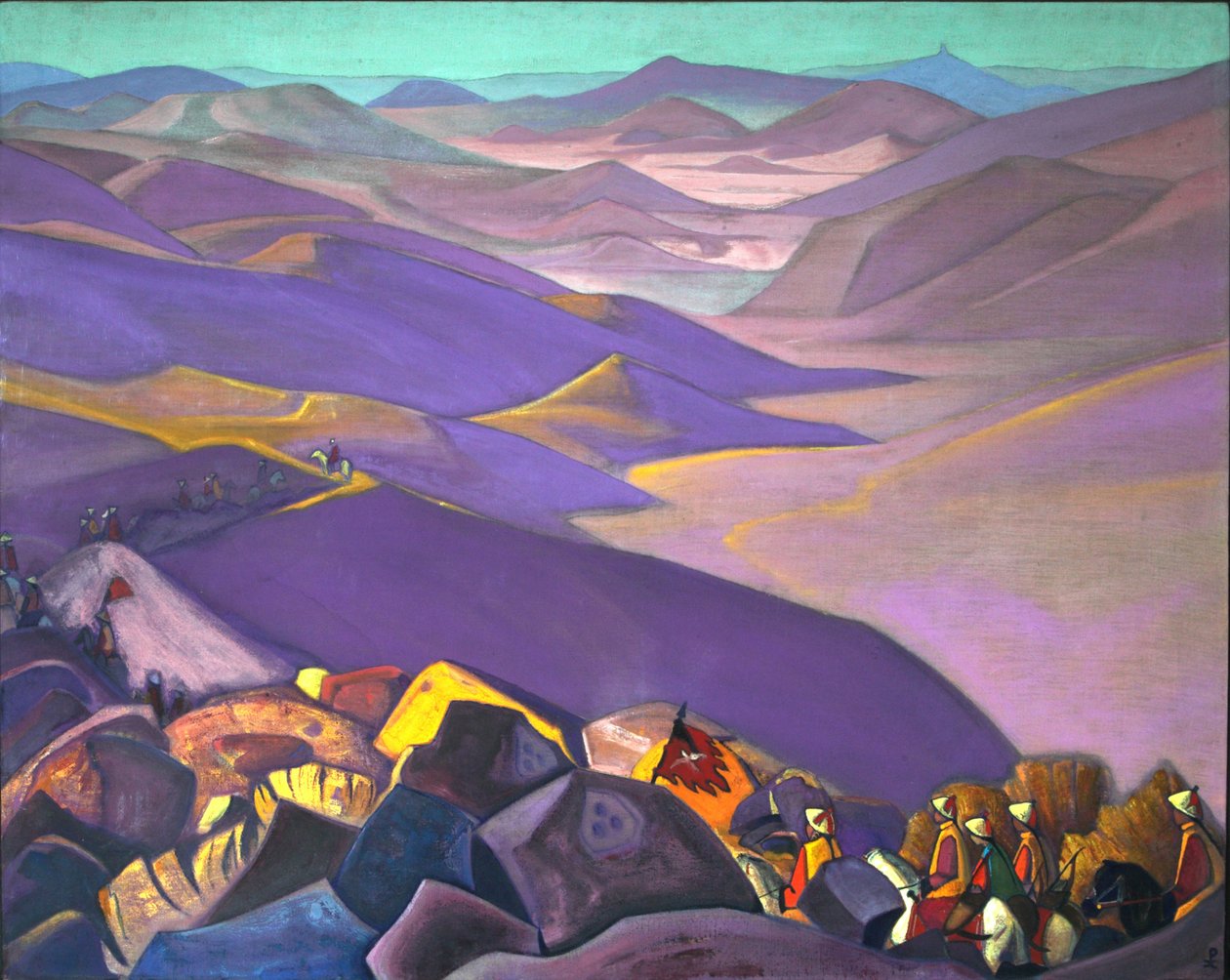
In the spring of 1220, the richest empire in the world was erased by a people who could not read. The same operating system they used to do it is running today inside Foxconn and TSMC, and it is the reason the West keeps losing.
Start with the herders.
The Khwarazmian Empire ran from the Caspian to the Hindu Kush. Its cities, Samarkand and Bukhara, were jewels of the age, full of libraries and astronomers and more wealth than the men riding toward them would ever see. Its army dwarfed anything the Mongols could field.
Within two years it was gone. The cities burned, and the Shah died alone on an island in the Caspian, hunted to the end by horsemen who had crossed half the world to find him.
The people who did this numbered perhaps a million. Herders, with no cities of their own and no written language until Genghis gave them one. On paper they could not have taken a single walled town. They took the largest land empire in history, twice the size of Rome's, in a lifetime.
They were almost always outnumbered. They had no wealth of their own. What they had was an operating system, written by one man, and it is still running. It is just not running in the West.
How he actually did it#
His real invention was organisational. He took the least promising material on earth, scattered and feuding nomads, and built a machine that out-thought and out-ran every settled empire it met.
He started by killing inheritance. On the steppe, as in a modern company, you rose by who your father was. Genghis broke that. He cut his people into units of ten, hundred, thousand and ten thousand, mixed the old tribes on purpose, and promoted on one thing only: whether you could fight and lead.
His best general, Subutai, was a blacksmith's son from a forest tribe who would conquer more ground than any commander in history. In any other army of the age he would have died a servant. The Mongols put their best people in charge while their enemies were still handing command to their best-born.
The code that held it together, the Yassa, bound the prince exactly as it bound the herdsman. Its discipline sounds insane today: if one man in a unit of ten fled a battle, all ten were put to death.
Western armies were coalitions of nobles who went home when they pleased. The Mongols could not go home. The unit was the self, and it did not break.
He wired the whole thing for speed. Relay stations with fresh horses every twenty-five miles could move a message as much as two hundred miles a day, in an age when Europe's news travelled at the pace of a walking man. The Mongols knew more, and sooner, than anyone they fought. They were deciding while their enemies were still waiting to hear.
And he had no vanity about what he lacked. His horsemen could not break a wall, so in China he took the men who could, the engineers who built the catapults and threw the fire, and carried them west, four thousand miles, the way other men carry gold. Within two generations he had stopped capturing those engineers and started commissioning them. The enemy's best capability had become his own.
The last and darkest piece was terror, and it was deliberate. A city that opened its gates was spared; a city that resisted was annihilated to the last soul, so the next one down the road would hear and open without a fight. It was accounting. Burn one town and the next ten surrender, for fewer men than a siege would cost.
That is how a million herders beat the world.
The system never died. It moved.#
Walk onto a Foxconn floor in Shenzhen today, the place that builds your iPhone, and you are looking at the Khan's army in hi-vis vests: a new worker put through actual military training before he touches a machine, slotted into a chain of command thirteen ranks deep, beneath maxims from the founder painted on the wall that he is made to memorise, one of which reads Growth, thy name is suffering.
The most thorough study of the place is titled, without irony, Workers as Machines. Terry Gou has put it less gently than any of his critics ever have.
As human beings are also animals, to manage one million animals gives me a headache. (Terry Gou, 2012). The company apologised the next day.
He has never hidden the rest of his source code either. Genghis Khan is his personal hero, and he wears beads from a Khan temple on his wrist.
If I decide to do it, I will break through. If I fail, I will die on the battlefield like Genghis Khan. (Terry Gou)
The system carries the Khan's dark line item too. In 2010 a wave of workers at the Longhua complex killed themselves, more than a dozen of them, by jumping from the dormitory roofs, and the company's answer was not to slow the line but to bolt nets to the buildings and ask the workers to sign a pledge promising not to take their own lives. Two years later, during a brutal Covid lockdown, tens of thousands climbed the fences and walked home down the motorway. You can argue, as defenders do, that the suicide rate inside Foxconn was no higher than China's as a whole, and perhaps it was not. The nets are still there. A company that has to hang nets and collect no-suicide pledges has already told you what kind of machine it is.
None of this is confined to chips, or to Foxconn. The same discipline built the country that now makes more than half the world's ships, most of its commercial drones, a third of its electric-vehicle batteries, and, in BYD, the company that outsells Tesla.
TSMC runs the system inside the cleanest factories ever built and keeps forty cents of every dollar, because it made itself the one supplier the world cannot replace. Huawei ran it until Washington decided the only way to stop the company was to break it by sanction. Its founder, Ren Zhengfei, a former army engineer, named the culture himself and meant every word of it.
In the battle with lions, the wolves win. A strong desire to win, no fear of losing, and they wear the lion out. (Ren Zhengfei, founder of Huawei)
It is not cheap labour, not any more, and Apple's own chief executive has been blunt about why the iPhone is still built where it is.
In the US you could have a meeting of tooling engineers and not fill the room. In China you could fill several football fields. The vocational skill is just much deeper. (Tim Cook, CEO of Apple)
Cost mattered once. It built the first factories, and it stopped being the reason a long time ago. While the West congratulated itself on having moved beyond all of this, the Khan's operating system took the physical economy of the twenty-first century.
The West is Khwarazmia#
We are the rich empire now. We have the libraries and the brands and the software, and we hold meetings about psychological safety while the people who will inherit the century bolt robots to a factory floor. Like every doomed civilisation before us we are ruled by an aristocracy, only ours runs on credentials rather than blood, and it promotes the well-schooled over the dangerous. Somewhere along the way we forgot how to build anything physical at scale. We even diagnosed it ourselves, and then did nothing.
We chose not to build. We chose not to have the factories, the systems, the mechanisms to make the things we need. (Marc Andreessen, "It's Time to Build," 2020)
When we are finally forced to try, the truth comes out. TSMC opened a fab in Arizona, and its Taiwanese managers concluded, in writing, in a lawsuit, that the Americans were lazy and did not understand commitment. Their founder, Morris Chang, had been saying the quiet part for years.
A machine breaks down at one in the morning. In the United States, it is fixed the next morning. In Taiwan, it is fixed at 2 a.m. (Morris Chang, founder of TSMC)
He called the whole American attempt to make its own chips a very expensive exercise in futility. The insult stings because the worker it was aimed at already puts in three hundred hours a year more than his German counterpart; we are not even the hardest-working of the soft empires, but the one trailing the country the conquerors had already dismissed as soft. Elon Musk says much the same about the people on the other side of the contest.
They won't just be burning the midnight oil. They'll be burning the 3 a.m. oil. They won't even leave the factory. In America, people are trying to avoid going to work at all. (Elon Musk, on China's manufacturing workforce)
So the comfortable answer, the one every politician reaches for, is to import the operating system wholesale: build the fabs here, reshore the factories, put Americans on the twelve-hour shift. It will not work, and we should not want it to. The culture does not travel, as Arizona proved, and even if it did, importing the factory would mean importing the nets. The West cannot out-suffer a people willing to suffer more, and it would lose its soul in the attempt.
How the West actually wins#
You do not beat the Khan's operating system by suffering harder. You beat it by running the half of it the West abandoned, and changing the terms of the half it cannot match.
Run the meritocracy, and run it without mercy. The West's deepest weakness was never lazy workers; it is a managerial class that rewards pedigree over results and would never hand command to a blacksmith's son. The firms that are actually winning have already noticed. Anduril builds weapons faster than defence primes a century old, because it hires for what you can do rather than where you trained, and ships in months what they ship in decades. SpaceX beat Boeing and Lockheed the same way. Trust the dangerous over the credentialed. Decide before lunch what the incumbents take a year to settle. The Yam and the meritocracy, rebuilt in Texas and California.
The creed itself is not even foreign here. It runs the most valuable company on earth. Jensen Huang built Nvidia into the engine of the AI age while preaching the same gospel that hangs on the Foxconn wall.
For all of you, I wish upon you ample doses of pain and suffering. (Jensen Huang, to Stanford, 2024)
Greatness, he tells them, is not about intelligence at all. It is character, and character is forged out of people who have suffered. Gou paints the thought on a wall in Shenzhen; Huang delivers it to Stanford with what he calls great glee. So the West does not lack the creed. Its best already live by it. What it lacks is the nerve to point that intensity at the thing no one can copy, and the sense to spare its own people the nets by building a factory that runs without them.
Absorb the enemy's capability, then, the way Genghis absorbed the Chinese engineers: copy what works, hire the people who built the Asian machine, and run it back. Then make the move the East cannot easily answer. Do not rebuild the human army. Replace it. Foxconn's million-worker floor is the cavalry, and the cavalry is where the bodies and the nets are, so the Western answer is to automate that floor out of existence. Chris Power's company, Hadrian, builds automated factories for rockets and satellites and turns baristas and bus drivers into capable machinists in about a month, because the software and the robots carry the load a Foxconn extracts from human beings. It is the operating system with the suffering engineered out of it, the factory that needs no nets. I am hanging a lot of this on one company most people have never heard of, and whether Hadrian scales is an open question, but the principle outlives the example: the job is to delete the floor, not to staff it.
This is the West's real edge, and it follows from a fact about the other side. The Eastern model depends on a supply of people willing to be used as machines, and that supply is running out: China is ageing, and its young will not take the jobs their parents did. The West never had that supply and should never want it, which is exactly where its advantage lies, because it can take the Khan's discipline and speed and meritocracy and aim all of it at making the human floor obsolete.
The choice underneath everything is which half of the chain you build for. Foxconn's horsemen are dazzling and replaceable, paid in bodies for two cents on the dollar; the engineers at TSMC made something no one can copy and keep forty, untouchable. That is the half worth building for.
And if you mean to run as hot as any of them, build the gauge before you build anything else. The Khan's system and Foxconn's both lack any instrument for the limit of what a person can bear, so they read that limit off the bodies, after the fact, once the nets are up. The West's advantage, if it has the nerve to use it, is that it can build the most demanding machine on earth and still refuse to run it on human suffering, because it runs on capital and code instead.
None of this is finally about margin. It is about not ending up a vassal, and the people actually rebuilding American industry say so plainly.
Reindustrialisation is bringing the critical things back, not because it is cheaper, but because otherwise you are a vassal state to the people who make everything you need. (Palmer Luckey, founder of Anduril)
The choice#
The Khan would not recognise a single chip, but he would recognise the system on sight: the numbered ranks, the memorised code, the absorbed enemy engineers, the speed, the will, the readiness to do what the soft and the rich will not. That system took the world once from a standing start, with nothing but organisation and nerve, and it is taking the physical economy again, from the East, while the West files paperwork and talks about balance.
We are Khwarazmia, and we can stay Khwarazmia, rich and walled and slow, and we know how that story ends. Or we can do the harder and stranger thing: pick up the operating system being used against us, strip the bodies out of it, run it on machines and merit and speed, and point it at the one war a free and wealthy people can actually win.
The Khan is eight centuries dead. His machine is still running, and the only question left is who runs it next.
Braindump by Josef Chen