· 11 min read
Turks All the Way Down
The most successful machine of the eighteenth century was a cabinet with a person inside. Much of the AI stack still is.
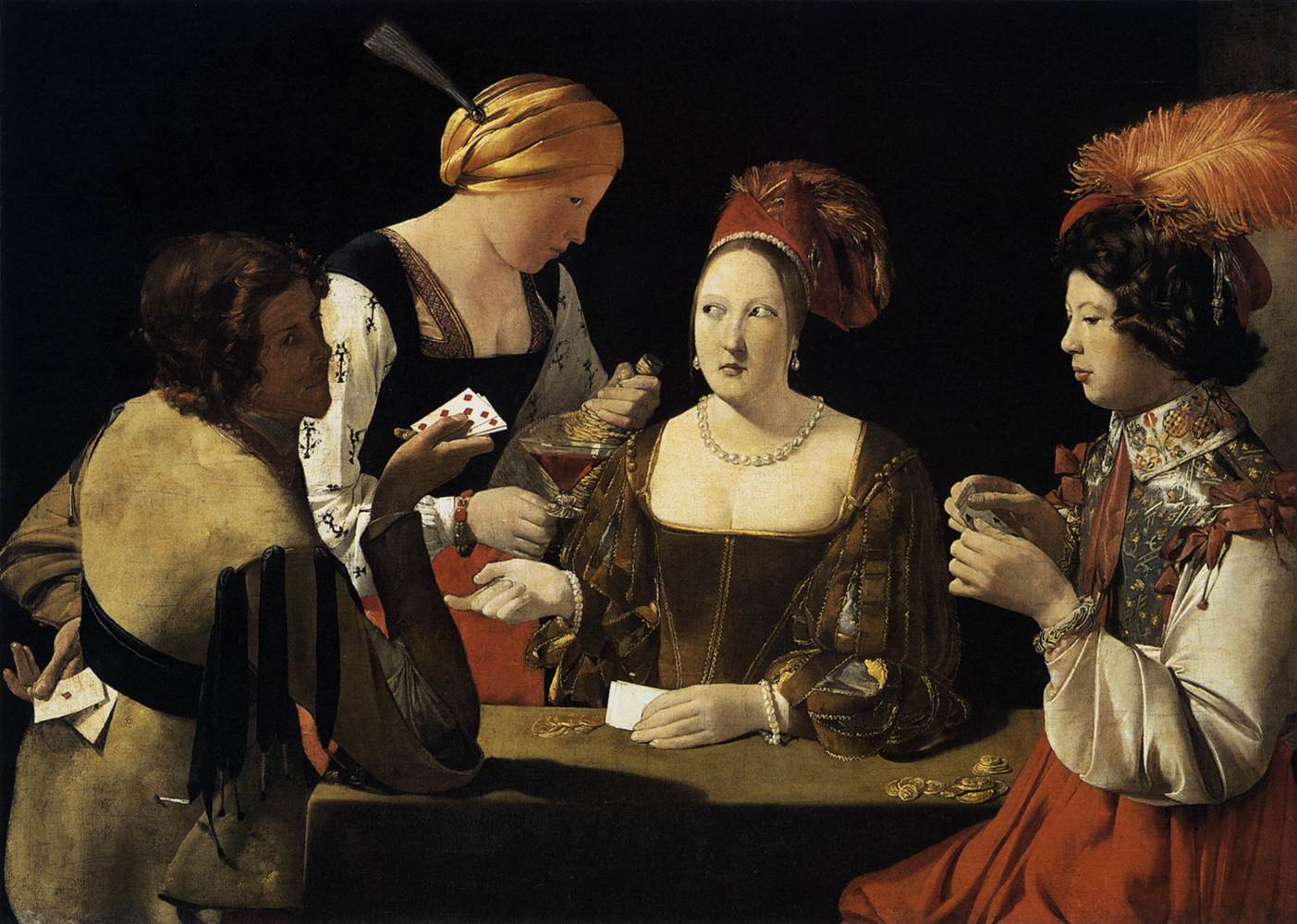
In 1770, at the court of Empress Maria Theresa in Vienna, a Hungarian civil servant named Wolfgang von Kempelen unveiled a machine that played chess. A wooden figure in Ottoman robes sat behind a cabinet. Before each performance Kempelen opened the cabinet's doors one at a time, held a candle behind the gears, and let the audience satisfy itself that there was nothing inside but clockwork.
The Turk was not the first cabinet. On 30 May 1739, Jacques de Vaucanson unveiled the Digesting Duck in Paris. It appeared to eat kernels of grain, digest them and defecate. The grain went into one container inside the bird and pre-loaded pellets came out of a second. Vaucanson also built a flute player and a tabor player, and later automated the silk loom for the French state.
Kempelen had not set out to build a chess player. He built the Turk in six months, after watching a conjuror perform for the Empress and remarking that he could do better. He spent the rest of his career on hydraulics, steam turbines, a typewriter for a blind pianist, and a speaking machine. He seems to have regarded the Turk as a nuisance and toured it reluctantly.
The method was never mechanical. The operator sat on a sliding seat, followed the game on a pegboard using magnets hung under the board above, and moved the Turk's arm through a pantograph. The candlelit gears the audience inspected were real gears, connected to nothing. What the audience checked was always the wrong compartment. Kempelen's genius was the order in which he invited them to check.
It won for eighty-four years. It toured Europe and America and beat Benjamin Franklin in Paris. At Schönbrunn in 1809 it played Napoleon, who is said to have tried an illegal move to see what it would do. The Turk replaced the piece. He tried a second, and the Turk removed it from the board. On the third, the Turk swept the pieces off with its arm. Napoleon is reported to have been delighted.
Johann Nepomuk Maelzel bought the machine in 1804. He was an inventor in his own right and the reason orchestras keep time to a machine: he built and promoted the metronome, and made ear trumpets for Beethoven, who wrote him a canon and then sued him over a battle symphony. The Turk was one exhibit in a travelling show that also carried mechanical trumpeters and a diorama of the burning of Moscow.
In 1826 Maelzel took the machine to America. It was wheeled into the assembly rooms of the National Hotel at 112 Broadway in New York on 13 April, then went to Boston and Philadelphia, then Baltimore, where it played for months and lost to Charles Carroll, one of the signers of the Declaration of Independence. Maelzel toured it for years afterwards through the American South and Canada, as far west as Saint Louis. His standing problem was staffing. He had trained an unnamed woman in France to work the cabinet before he sailed, and eventually recalled a former operator, William Schlumberger, from Alsace to cross the Atlantic and sit inside it again.
The operators across those decades included Johann Allgaier, Boncourt, Aaron Alexandre, William Lewis, Jacques Mouret and William Schlumberger. Mouret sold an account of the mechanism for the price of a drink, and it ran anonymously in Le Magasin Pittoresque in 1834 under the title "An attempt to analyze the automaton chess-player of M. Kempelen". Almost nobody believed it. Edgar Allan Poe saw the Turk in Richmond in 1835 and published "Maelzel's Chess-Player" the following year, arguing the cabinet had to hold a person because a true machine would never lose. The Turk lost sometimes.
Schlumberger followed the machine to Havana in 1837 and died there of yellow fever, leaving Maelzel with a chess automaton and nobody to sit in it. Maelzel died at sea the next year on the passage home. The Turk was sold on, passed to the Chinese Museum in Philadelphia, and burned there in July 1854.
In February, Will Manidis published "Tool Shaped Objects". "The market for feeling productive," he wrote, "is orders of magnitude larger than the market for being productive."
This spring, across 67 frontier models, the ensemble rarely beat its own best member; the models failed together, on the same inputs, in the same ways. Last autumn roughly 90% of roboticists at the field's flagship conference voted that humanoids will not replace most human workers within twenty-five years, and the vote grew more skeptical after the debate. Figure's humanoids run BMW's Spartanburg line at about $25 per robot-operating-hour, after a trial of ten-hour shifts that loaded ninety thousand parts into real cars.
In 1819 Charles Babbage played the Turk twice in London and lost both games. He worked out that it was a hoax and said so. It stuck with him anyway. He spent the rest of his life on the Difference Engine and then the Analytical Engine, and in 1864, decades after those two losses, he was still writing about building a machine that could play chess. The fake did not fool him. It set the problem for him, which is a different and more useful thing for a fake to do.
Poe worked the same problem seventeen years later and put his finger on why the honest machine was the harder one to build:
Arithmetical or algebraical calculations are, from their very nature, fixed and determinate. Certain data being given, certain results necessarily and inevitably follow. But the case is widely different with the Chess-Player. With him there is no determinate progression. No one move in chess necessarily follows upon any one other. From no particular disposition of the men at one period of a game can we predicate their disposition at a different period.
— Edgar Allan Poe, "Maelzel's Chess-Player", 1836
Determinate work can be welded into a mechanism. Contingent judgement cannot, which is why there had to be somebody in the box.
The cabinet had successors. Ajeeb, built by the cabinet maker Charles Hooper in 1868, drew tens of thousands of spectators and played Harry Houdini, Theodore Roosevelt and O. Henry, with a man inside as before.
Ajeeb ran on hidden operators for decades. They included Constant Ferdinand Burille, Charles Moehle, Charles Francis Barker, and the former US champion Albert Hodges, who in 1898 introduced the machine to Harry Nelson Pillsbury. Pillsbury sat inside Ajeeb on and off until 1904. He was, at the time, one of the strongest chess players alive, and he spent those years in a box being mistaken for gears.
Mephisto is the interesting one. Charles Godfrey Gumpel, an Alsatian manufacturer of artificial limbs, spent six or seven years building it and first showed it at his home in Leicester Square in 1878. Mephisto had nobody inside. It was operated remotely, by electromechanical transmission, by a chess master in another room, usually Isidor Gunsberg. The compartments were genuinely empty and the machine still did not play chess.
In 2005 Amazon launched a marketplace for invisible human labour and called it Mechanical Turk. Its own description of the product was "artificial artificial intelligence". In 2018 Google demonstrated Duplex booking a haircut by phone, and confirmed afterwards that a share of calls would be completed by human operators. In 2019 the Wall Street Journal reported that Engineer.ai's app-building assistant relied largely on human engineers.
That company, by then Builder.ai, had raised around $445 million from investors including Microsoft. Its assistant, "Natasha", had mostly been routing work to roughly 700 engineers. Its administrators filed in 2025.
Amazon's Just Walk Out stores involved around a thousand workers in India reviewing transactions, near 700 per 1,000 by one report, against an internal target of 50. Amazon disputes that framing and retired the system from its Fresh supermarkets in 2024. The SEC has charged a public company over the gap between its AI demo and its offshore call floor, and the regulator's term for the genre is AI-washing.
This year 1X opened pre-orders for the Neo home humanoid with an "Expert Mode" printed on the order page, in which a human operator in a VR headset sees through the robot's eyes and folds your laundry from a room you will never visit. Figure's Brett Adcock has publicly described that approach as staging "fake videos with human teleoperators in the next room". Mephisto got there in 1878.
The Turk got its honest ending eventually. In 1989 the illusion designer John Gaughan finished a working reconstruction and showed it that November at a history of magic conference, presented much as Kempelen had presented the original. The difference was the compartment. Where the chess master used to sit, Gaughan put a computer running a chess program. It took two hundred and nineteen years for the machine to become the thing it had always claimed to be, and by then nobody found it surprising.
Kempelen spent his last decades on that speaking machine: bellows, reeds and a rubber mouth that could talk, badly, like a child. He published its full mechanism in 1791, every compartment open at once. The line of work it started runs through Bell's telephone to the voice models in your pocket. The cabinet made him famous. The bellows made the future.
The regulator arrived in stages. In March 2024 the SEC brought its first two AI-washing actions, against Delphia and Global Predictions. Delphia had told clients it put machine learning over their personal data. Global Predictions had called itself the first regulated AI financial adviser. Neither had the capability it advertised. The penalties were $225,000 and $175,000. The Presto action followed in January 2025, the first against a public company, a restaurant-technology business that had gone public by SPAC in September 2022 and stayed on Nasdaq until September 2024.
The robotics evidence arrived in the same period and points the other way. The Spartanburg trial ran eleven months. Two Figure 02 robots worked ten-hour shifts Monday to Friday, logged about 1,250 hours of runtime, loaded more than ninety thousand parts and contributed to over thirty thousand X3s before the project closed in 2025. BMW has since put Figure 03 on parts sequencing in logistics at the same plant, opened a Center of Competence for Physical AI, and started a second pilot at Leipzig. Unitree filed on 20 March for the Shanghai STAR Market seeking 4.2 billion yuan, the retail book was subscribed thousands of times over, and the stock closed its first session 460 per cent above the issue price.
The people who build the machines were polled while all of this was happening. At the IROS debate in Zhejiang in the autumn of 2025, eighty per cent of the room said humanoids would not soon replace most human workers before anyone spoke. Ninety per cent said so afterwards. Wang Xingxing of Unitree was on the floor for the vote. Hans Moravec named the underlying paradox in 1988, and it has held for the thirty-eight years since. The dancing is solved. The hands are not.
Redundancy only works when the errors are independent. That is the whole theory of it, in aircraft, in RAID arrays, in juries. So where does independent error come from? Not another head in the cabinet, because the heads agree. It comes from outside, and there is exactly one distribution nobody has finished scraping. Every lab has the same internet. Nobody has your contact with matter. An arm that grips, slips and recovers is drawing samples from a process that is not in anyone's training set and cannot be distilled from a bigger model. Consequence is the data you cannot fake upstream.
Look at what that constraint does to the engineering, because this is the part I love. At the edge every cloud habit dies. A robot runs at batch size one: there is no other traffic to amortise the thinking, the latency you demo is the latency you serve, and the bottleneck turns out to be not bandwidth but the overhead of launching the work. Memory stops being an abstraction. The flash wears out, so every write carries a shadow price, and policies learned to commit something to memory only when it would change the next action, a discipline I would also like to prescribe to several dashboards. Even redundancy comes back, honest this time: not five guessers voting, but one policy acting while a reflex watches its internal state for the wobble that precedes a fumble, ready to hand control to a stronger model just in time. A chatbot that pauses for ten seconds is thinking. An arm that pauses for ten seconds has dropped what it was holding. There is nowhere to put a cabinet at the edge, because there is nothing behind the robot but the robot.
The orchestration layer is Kempelen's cabinet rebuilt at planetary scale, and the doors still open one at a time. A committee of correlated guessers is one guesser in a trench coat. It is Turks all the way down.
If the last era's scaling law was more compute per model, the one I am betting on is more world per model.
Build the bellows.
Braindump by Josef Chen