· 14 min read
I Toured Unitree's Factory. I'm More Bullish on the West Than Ever.
Unitree, famous for robots that build robots, has about $50 of machinery per robot. Run the same numbers at American wages and Western machine builders win.
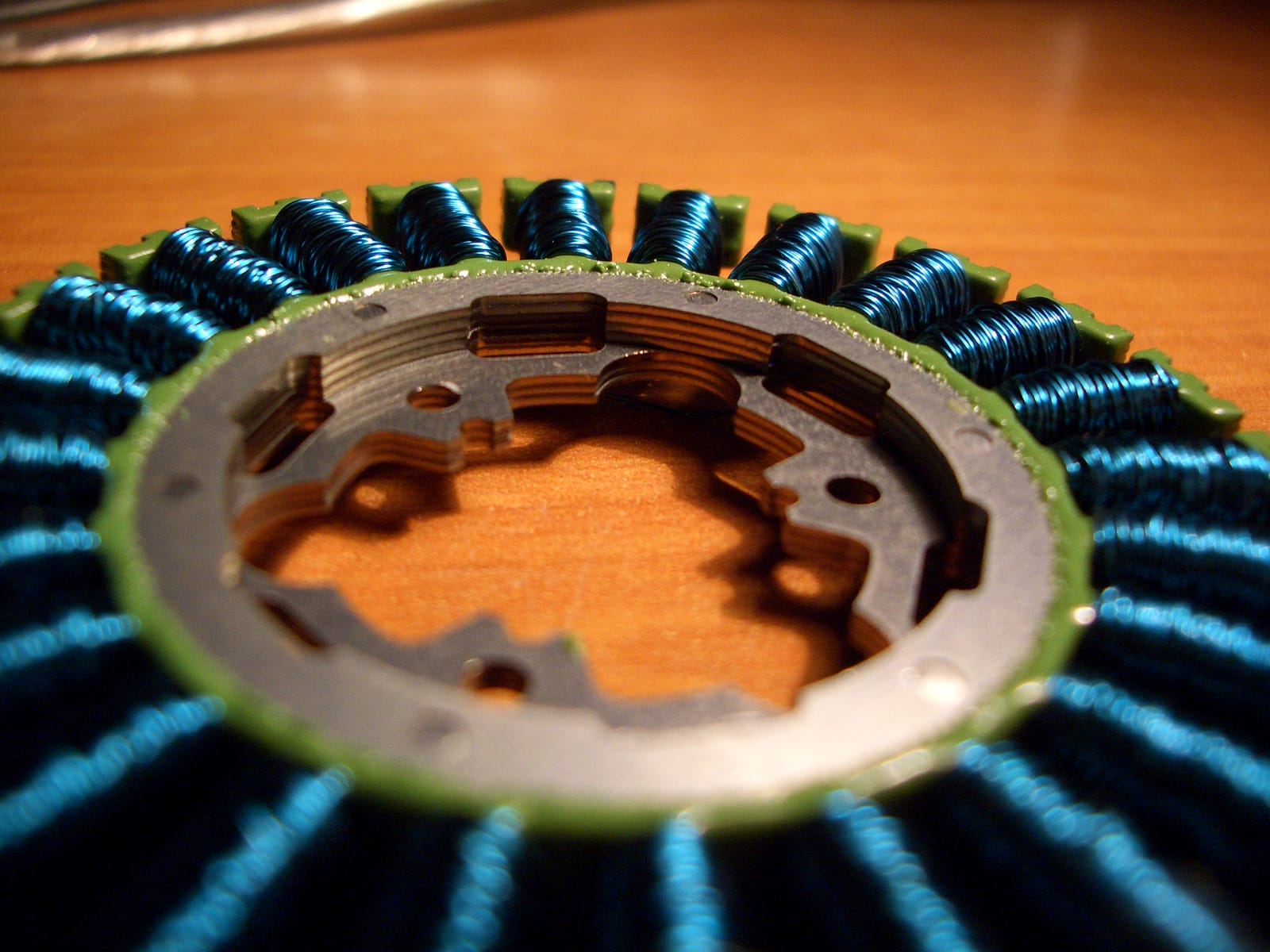
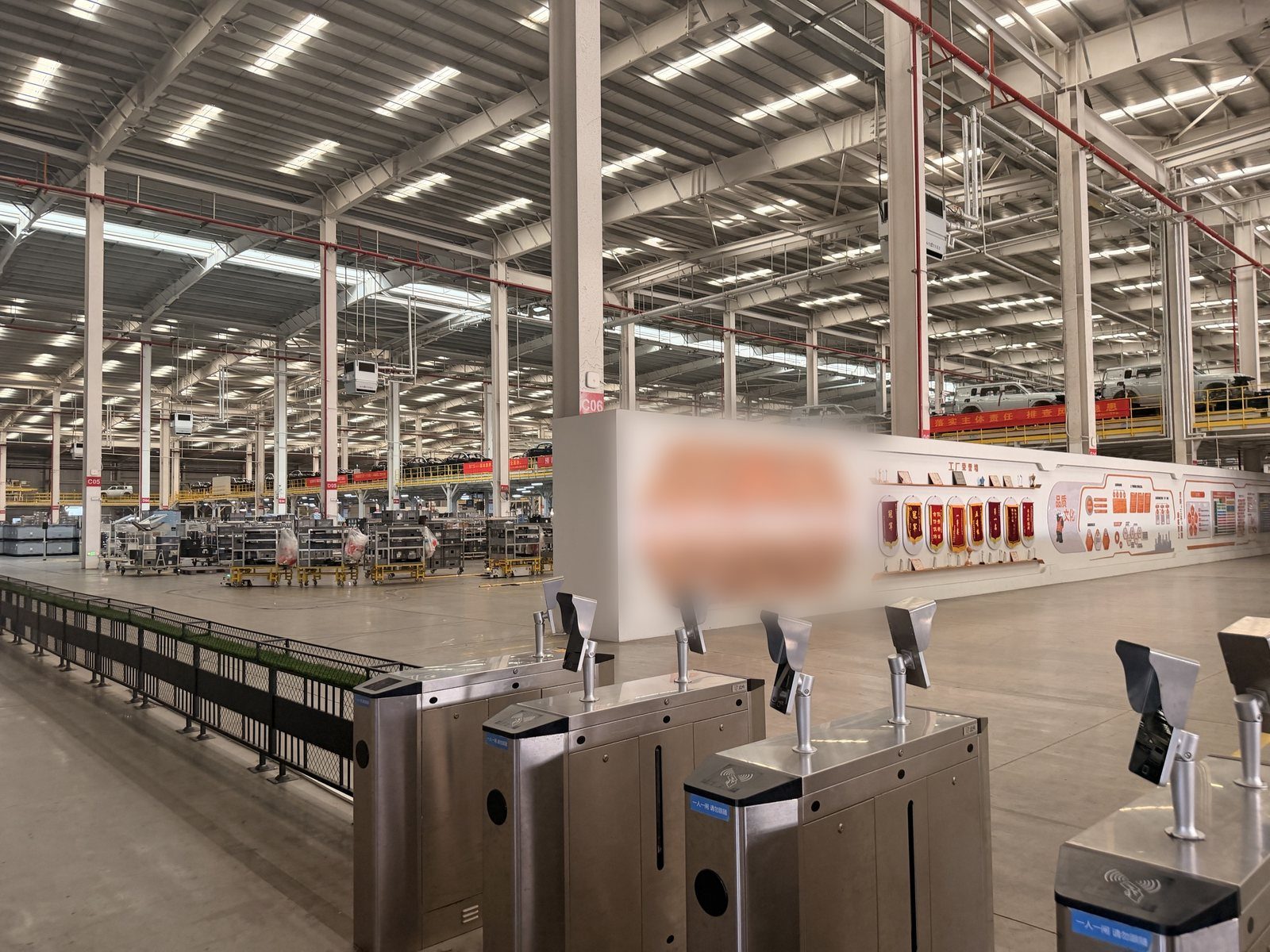
On Wednesday I toured Unitree's factory in Hangzhou, and I wasn't allowed to take pictures, obviously. In the building that makes the actuators, the motors that drive every joint, there were one or two lines of new automated machines. The rest of the floor was filled with humans operating old-school winding machines. (Winding means wrapping copper wire around a motor's core.) I don't know what percentage of the motors are made on the automated lines. But staffing the floor with humans made sense.
This is a robot company with a viral video (28 million views) of a humanoid doing assembly in its own factory, which Unitree calls "an actual deployment". Its IPO prospectus calls it a pilot, and says assembly is "currently mainly manual". At the end of 2025 all of Unitree's machinery was worth about $1.7 million on its books, at a company that made almost 32,000 robots that year: some $50 of machinery per robot!

Unitree Embodied AI Model Manufactures Robots in Factory🤩 Based on Unitree’s UnifoLM-X1-0 embodied AI model, this is an actual deployment at Unitree’s own robot factory.
It doesn't need more. Labour was just 8% of what it cost Unitree to make its robots in 2025, outsourced assemblers included, and most of the rest was parts. With more orders than it could hire workers for, Unitree took on more outsourced workers last year, paid by the hour for assembly, welding and testing, and switched them between lines depending on orders; the filing says it doesn't have a fixed production capacity. With those hands it made about 26,000 robot dogs in 2025, more than the roughly 20,000 IDC reckons the whole world shipped the year before.
So there's only so much a machine can save: halve a cost that's 8% of the bill and you save 4%. Unitree expects the motor line it's building to cut the labour in each motor by more than half, and the cost of one robot model by under 2%. Its labour per robot had already roughly halved since 2023 (our arithmetic), and the filing credits scale, standardised processes and more skilled staff. None of those is a machine; two are kaizen, and I named my company, KAIKAKU, after the other word.

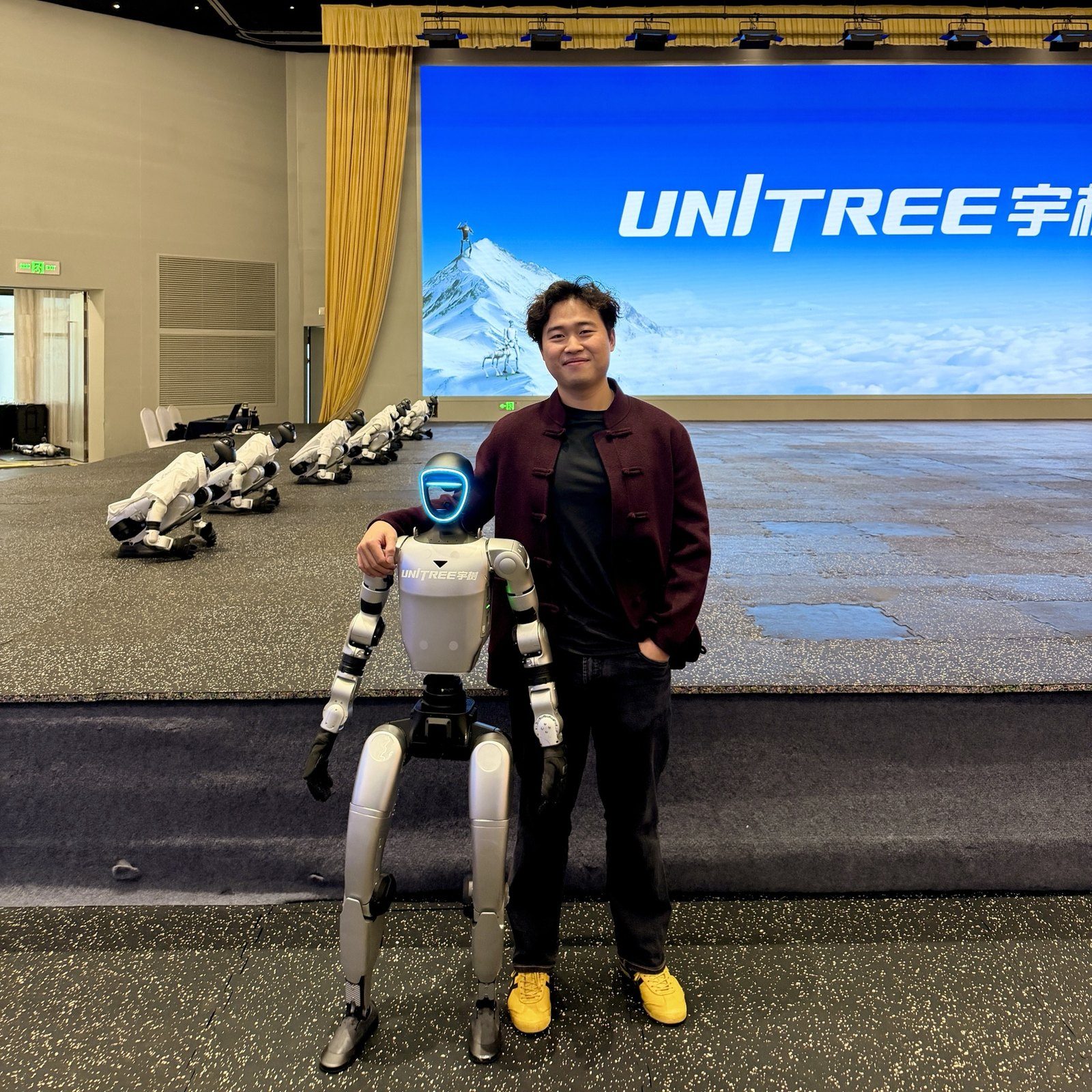
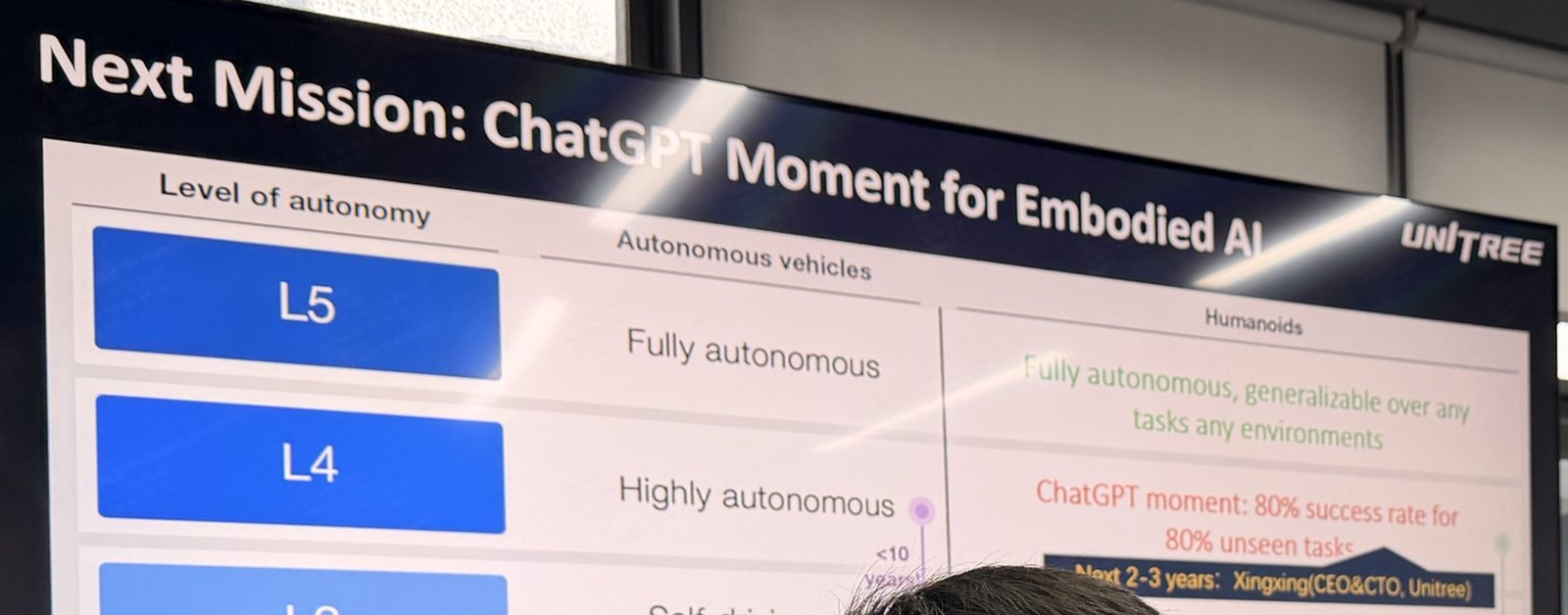
The other reason Unitree builds by hand starts in the showroom. Our host told us that Unitree's CEO, Wang Xingxing, recently asked a G1 running GPT-6 to fetch him a bottle of water from another room. It did. Very slowly. Unitree's own slide puts robots' "ChatGPT moment", when they can do 80% of tasks they've never seen 80% of the time, another two or three years away.
Until then, humanoids are mostly toys for researchers: our host named Nvidia, Amazon, Meta and universities, plus AI startups that need a demo, some of them to raise money. Three quarters of Unitree's humanoid revenue came from research and education in the first nine months of 2025, and under 5% from factories or any other industrial work (half or more of what Unitree files as "industry" is robots giving guided tours at companies!). When someone asked what the GD01, a rideable mecha from about half a million dollars, is for, the answer was that Wang had wanted one since he was a child.
A product without a job changes every year, and a custom machine only works if the product is kind of frozen, so a machine built for this year's robot is scrap next year. Right now everything's ever-changing, except the motor. Unitree is automating its joint modules first because they're the parts its robots share most (we were told the same B2 motor can go into its H1 and H2 humanoids). When I toured a drone factory, the circuit boards and the motors were made by machine and final assembly was done by hand. In a drone the motor is a whole component; in a humanoid it's half of one, the copper-and-magnets half, not the gearbox, and that half has stopped changing, a bit like a car's tyres, which barely change while the car gets redesigned every few years. And the joint motor in Unitree's Go2 dog is wound from the outside just like a drone's.
Back in May I said China's new factories "bolt robots into every one" and the West should "erase the factory floor". The first bit wasn't true of the plant I visited, nor of China as a whole: it installs more than half the world's new industrial robots, yet the IFR now counts fewer robots per factory worker in China than in America. For now Unitree is right. The second bit I still believe, but only for the parts that have stopped changing, and for a harder reason, which is why I left Hangzhou more bullish on the West than ever: America is shutting out cheap hands, so the motors it makes at home will be wound by machines, and the West will build those machines.

Ford's first line had no machine in it#
Ford's first moving assembly line, at Highland Park in 1913, put the magnets on Model T flywheels to make magnetos, small magnet-and-coil generators, kin to the motors on Unitree's winding floor. The work was split into 29 operations, very dumb and simple ones, each worker doing, in Ford's words, "as nearly as possible only one thing with only one movement".
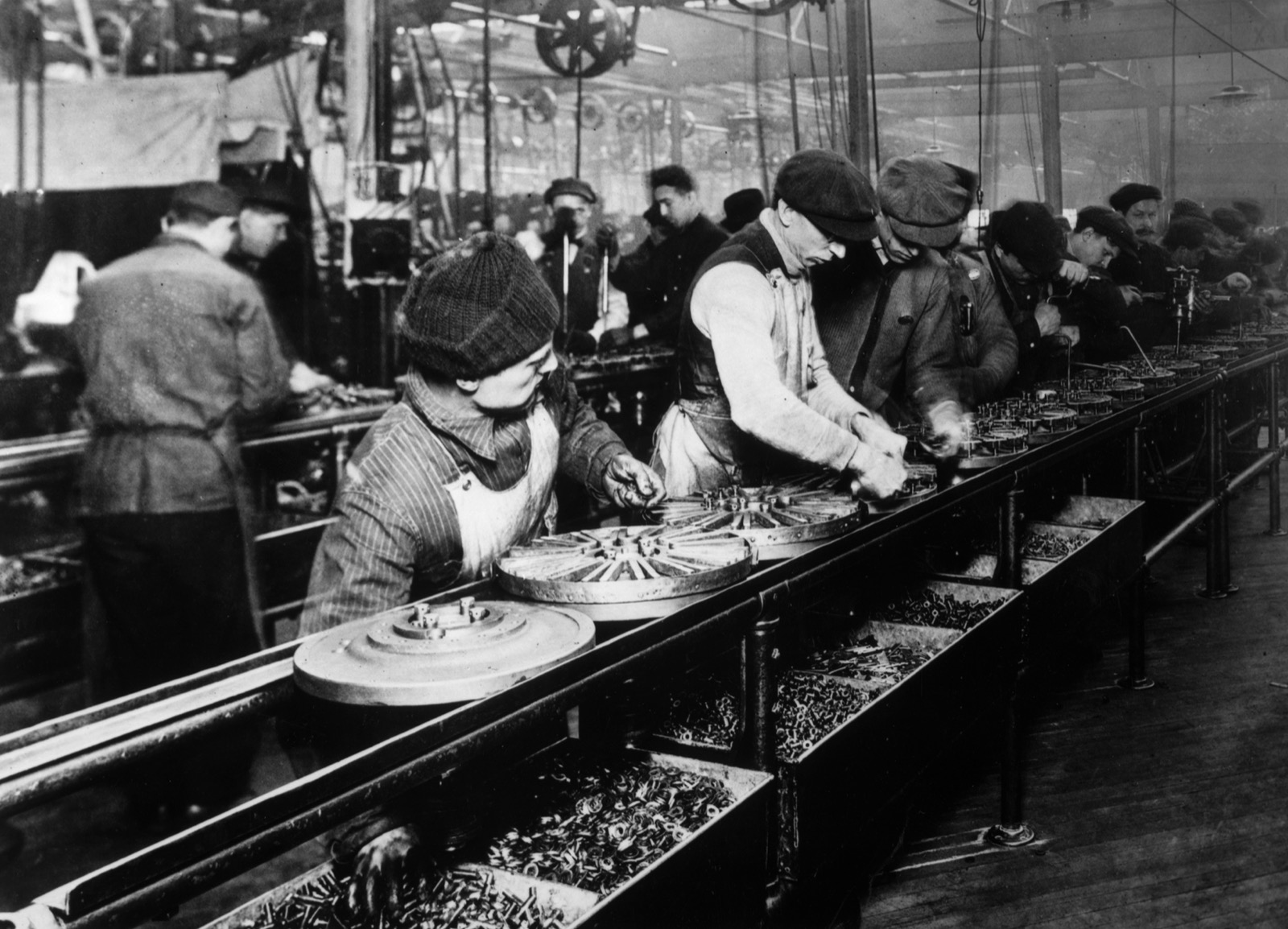
The machines came once Ford froze the Model T, and by 1914 Highland Park was full of special machine tools. Then the product changed. When the Model A replaced the T in 1927, about half of Ford's 32,000 machine tools had to be rebuilt and another quarter were scrapped. Foxconn learnt it from the other side. In 2011 Terry Gou promised a million robots within three years; by the end of 2016 Foxconn had about 40,000 (the iPhone changes every year).
What makes a machine expensive is mostly not the machine. A robot is like a piano: most of the cost is the pianist. Programming and integration are 50 to 70% of the cost of a robot application, and every redesign means paying the pianist again.
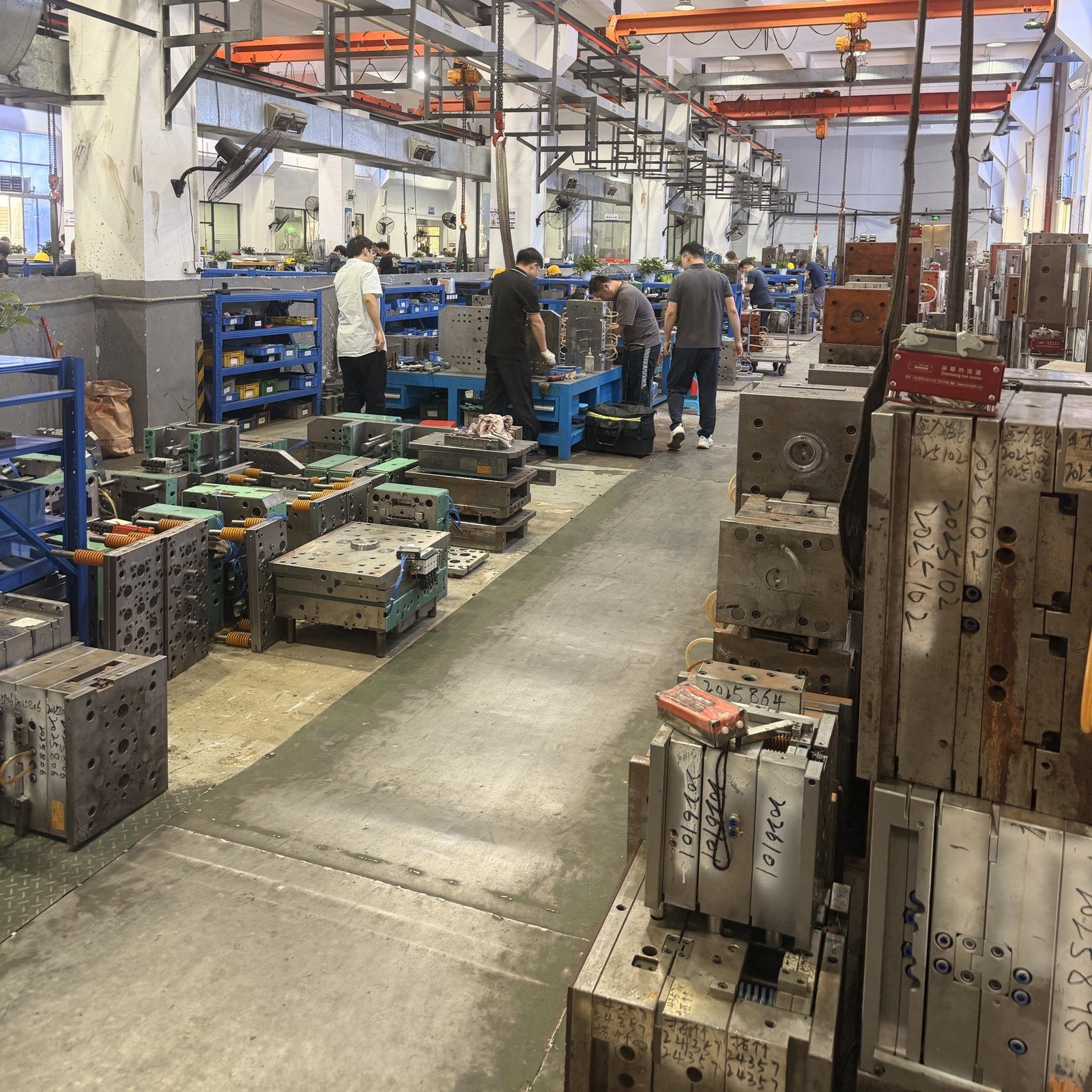
When hands get too pricey for a factory, there are only three doors: organise them more efficiently (this is what Ford and Foxconn did in their heyday, and Unitree is doing now with kaizen), find cheaper hands elsewhere, or automate the work away. And automation has historically needed the part to be predictable and unchanging (AI is changing that).
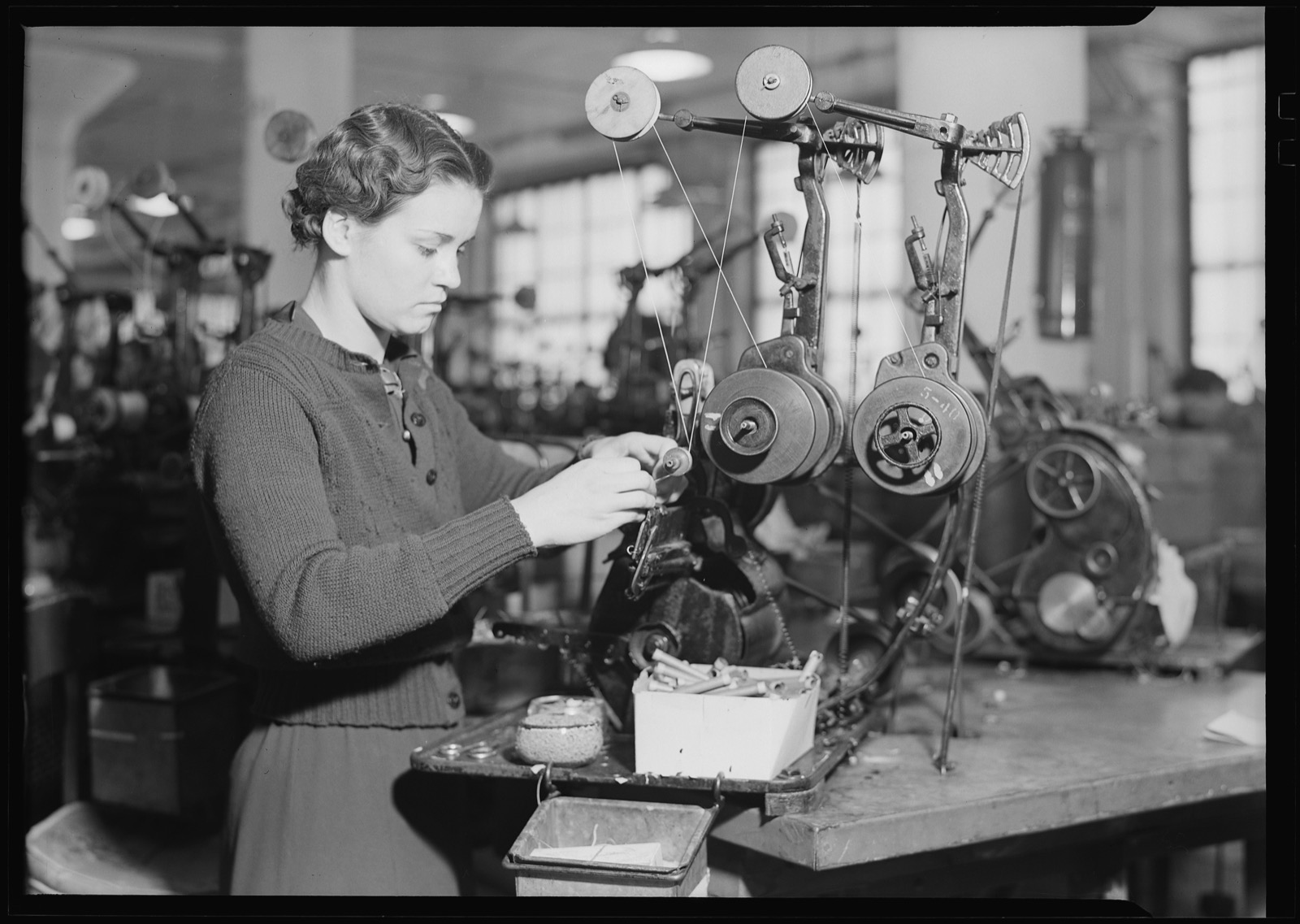
RCA's response to rising wages was to leave: it moved its radio and television work out of Camden to Bloomington, Indiana in 1940, then to Memphis, then from 1968 to Ciudad Juárez. Jan Bena and Elena Simintzi found that once US multinationals could use cheap Chinese labour after the 1999 US-China trade agreement, they cut their process innovation.
America shuts the cheap doors#
An hour of factory work costs at least six times as much in America as in China (our estimate), so at American wages labour would be about 40% of Unitree's costs instead of 8%. Kaizen won't close that. Unitree halved its labour per robot in two years with kaizen and scale, which is great, but that's a factor of two and the gap is six. Neither will moving, because Chinese hands are now being shut out.
Two weeks before our visit, Unitree posted a video of its newest humanoid, the H2-X "Kung Fu Legend Guardian", kicking dents into a car.
Unitree Introducing: H2-X Kung Fu Legend Guardian🤖 Powerful performance to serve and guard you, with a maximum endurance of approximately 8 hours. Please use the robot safely and in a friendly manner.
Unitree's user agreement calls it "a civilian robot company" and bans any military use. In June the Pentagon put it on its list of Chinese military companies anyway, on ownership and state-subsidy grounds rather than weapons. In July the FCC stopped approving new humanoids and robot dogs unless they're made in America with more than 65% American parts by cost, and its determination says robot dogs "will be essential to the modern battlefield".
Under my reading, a robot assembled in America with Chinese motors could still qualify, as long as the joints are American-made. The Pentagon goes further for the drones its programme buys: from August 2027, their stators have to be wound outside China and a handful of other countries.
How the West wins#
The motor line Unitree expects to save 1.7% of one robot model's cost would save about 9% at American wages, on our estimate. The machine is worth five or six times more in America than in Hangzhou, so America can afford one nobody can switch off.
And the machine is cheap. Take a small motor, the kind that spins a drone's propeller. Labour accounts for less than a dollar of a $20 motor at T-Motor, one of China's leading makers (our calculation, based on its filings). At American wages, labour might account for $5 or $6. And a motor-winding machine amortised across millions of motors should add only a few dollars to production costs. Yet in late 2025 a former senior US defence official put a drone motor at $12 to $25 made in China and $100 to $225 made in America. I think the gap is mostly scale. The millionth copy of a motor, much as with books, is far cheaper to make than the first, and T-Motor alone made around 50 times as many last year as the official reckoned America could.
In America, the volume is already arriving. Figure claims that in less than four months its BotQ factory has gone from making one humanoid a day to one an hour. Tesla says most of a line to build a million Optimus robots a year is already at its Fremont plant. 1X says it winds its own motors on machines its engineers designed and built at its Hayward, California, facility, automated from a spool of copper to a finished actuator; at Unitree, people still do much of that. And Westmag, a startup backed by Lux, Founders Fund and a16z, makes actuators for robots and motors for drones on a partly automated line.

Westmag is building American robot actuators and drone motors at scale. In 2025, @westmagco raised $11M led by @a16z, with participation from @FoundersFund, @LuxCapital, NFDG, @MenloVentures, and other top investors. Since then, we’ve been building industrial capacity, crawling Show more

Somebody has to build those lines, and we in the West are extremely good at building the machines that build things, especially once the thing becomes a commodity. China passed Germany as the top exporter of machine tools last year, according to Germany's machine-tool association, but look at the arms inside its own car plants.

Yes, many Chinese factories still rely on tons of industrial robots and high-end CNC machines from Japan and Europe. If you look closely, you can spot the Fanuc, ABB, Yaskawa etc. label. Like in this Xinhua photo from Xiaomi’s super high-tech EV factory.


I did a few factory tours in China a couple of weeks ago (caveat: not in the most productive places) and was struck by how much they relied on CNC machines + robots made by European and Japanese companies
When a product settles, Abernathy and Utterback wrote in 1978, the important innovations in making it "are likely to originate outside the unit", meaning from the machine builders. Nittoku, the world's biggest winder builder (self-assessed), builds winding machines in Japan and Austria but also in Suzhou and Shenzhen. Where a machine is made is more important than who's making it (and by the West I mean Japan too). Odawara Automation builds its winders in Tipp City, Ohio. German winding-line maker Aumann saw its electric-car orders more than halve in the first half of this year, and it had its first orders for drone-motor lines by August.
Then there are the pianists, the people who program the machines. Their time is what used to make a custom machine worth building only for a frozen product, and AI is shrinking that work as well. HD Hyundai and Palantir report that their AI agents have reduced the average time it takes to resolve a robot-programming issue from 21.5 days to 7.9. BMW, for instance, can now virtually test whether a new car model fits its plants in just three days, rather than nearly four weeks of real testing, and ABB and Siemens report best-case cuts of three quarters or more in engineering work. (See my piece from earlier this week on agents that program a robot in a morning.) The advantage China will lose quickest isn't its cheap workers, it's its army of robot programmers.

China makes the magnets, but GM has just finished qualifying MP Materials' magnets from Texas, with deliveries starting this quarter, and Apple has a $500 million deal with MP for magnets from 2027. Noveon, also in Texas, has been delivering to GM since July 2025. BMW skips the problem: its newest EV motor, made in Steyr, uses no permanent magnets at all, and BMW wants capacity for over 100,000 of them this year.
This is how we lose. By 2022, all of the top ten manufacturers of solar panel-making equipment in the world were Chinese. America's solar panel companies then said they had no option but to buy Chinese-made equipment, Reuters reported, and in 2024 Washington waived tariffs on the machinery. Winding is different, because the winder is a tiny share of a motor's cost: a winder at twice the price still saves 8 to 9% of a robot's cost at American wages. Motor buyers got their warning early. From 18 November Beijing requires export licences for its biggest drone motors. Chinese-made winders also still carry a 25% tariff, which Washington hasn't waived.
We can still lose. Production could move to cheaper hands; there are plenty of countries that the Pentagon motor rule doesn't apply to. And the rule is a programme policy, so it could be waived before output ramps up. The magnets have a choke too, the NdPr oxide underneath: Western production would have to "immediately double" just to supply the magnet plants already announced, MP says.

Terrible, short-sighted move. We are shooting ourselves in the foot here. I am happy to spend time with policymakers to convince them of the idiocy of banning Chinese hardware in 2026, and how the US might regain a competitive edge in hardware. USA is not in the position of Show more

Yesterday, Congress took up the GUARD Act, bipartisan legislation to keep adversary-controlled robots out of American infrastructure. Our CEO Peggy Johnson wrote about why this hearing matters, in a new op-ed with @PirateWires. 🧵

Eric Jang thinks banning Chinese hardware is idiocy and wants an American Unitree instead. Agreed! But build it with machines. (Disclosure: I invest in Standard Manufacturing, which builds autonomous assembly lines, and in Dirac, Isembard, RMFG and Minerva, a US humanoid maker that gains from the FCC rule.)
Some unsolicited advice#
Founders: make motors, not humanoids, which are still sold mostly to research labs. Every robot, drone and e-bike needs motors, and motors change far less than the machines around them. Make sure your stator line can quickly retool for different sizes, because the sizes still do. Sell motors. Don't build robots by hand in Ohio.
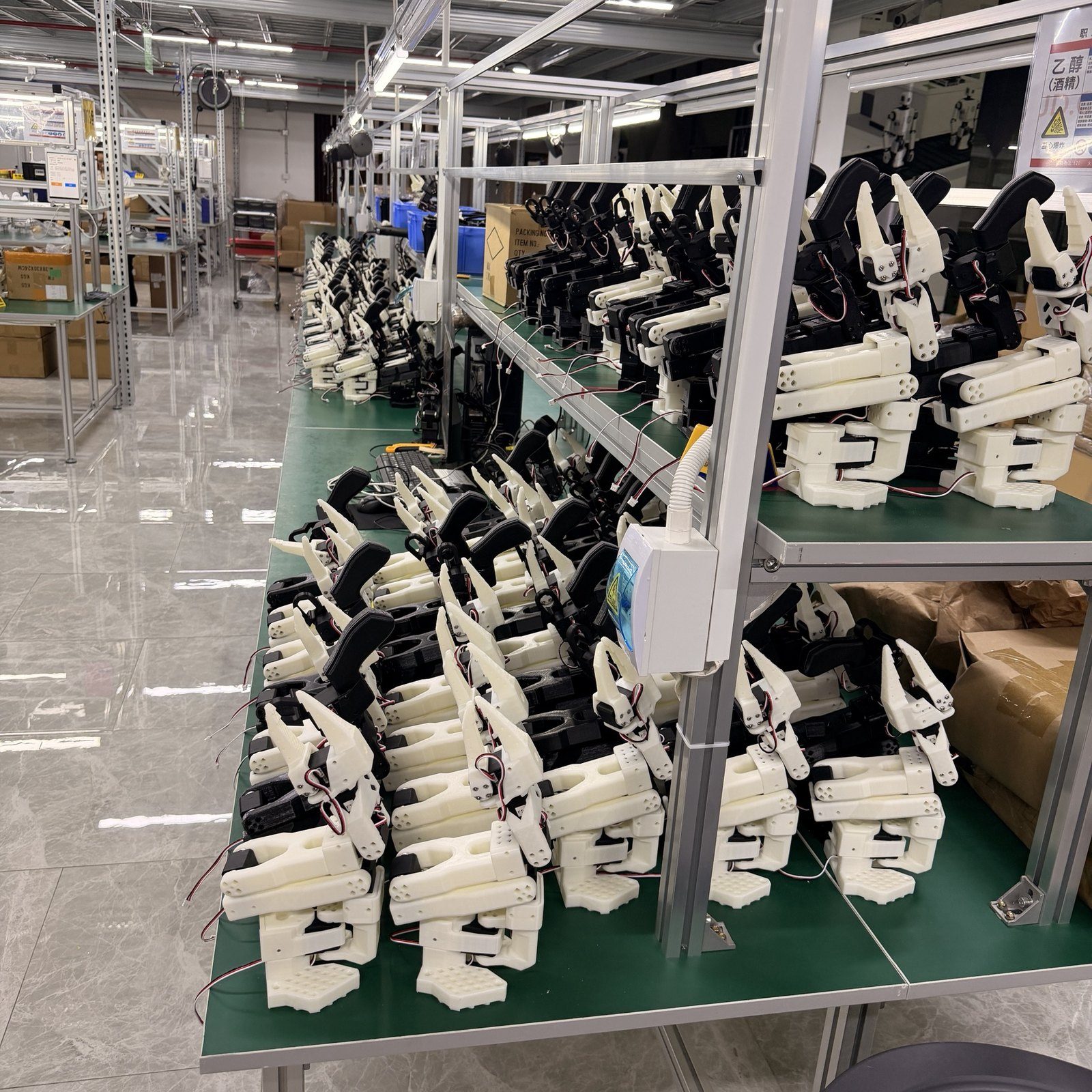
For VCs: don't decide a winder on price. Decide whether someone will still service it if there's a trade dispute. Then back the line if it can sell motors at no more than twice China's price to buyers no rule forces to buy from it, in Europe for a start, because protection only buys you a few years' grace in which to cut costs.
If most new American motor lines in 2028 wind coils on Chinese machines, I'll eat my words.
Hands still win in Hangzhou. In America the machines will, and the West will build them.
The next day I went to BYD, to a final-assembly plant two and a half hours east of Shenzhen, and again I wasn't allowed to take many pictures. When BYD started making batteries in 1995, its founder, Wang Chuanfu, did Unitree's arithmetic: an imported machine cost $200,000, written off at RMB 20,000 a month, enough to hire a dozen workers. "A person plus a jig equals a robot," he told CCTV. Thirty years later, everything I saw was automated: robots welding the bodies, and finished cars rolling off the line and onto BYD's own ship.
Nothing exotic, though. The robots I saw were Fanuc and KUKA arms on pre-programmed paths, similar to what Tesla uses in its factories. The difference is in the modular grippers at the end of the arms (bolted together out of aluminium extrusions full of holes) and the people working around them, who adapt a cell to a new car model, or improve its process, in rapid and painful iterations. In 2024 the body shop at the same site could switch between ten models on one line. BYD employs almost as many people in R&D alone as Tesla has in total.
Last year China's car industry installed about six times as many robots as America's. Anyone can buy the robots from Fanuc or KUKA, and nothing I saw is beyond an American plant, except the sheer number of people who re-cell them every time the car changes. That's where agents come in. So how long does BYD take to re-cell a line for a new car, and could agents do that job for an American plant without an army? That's part 2.
Braindump by Josef Chen
China Field Notes
Two weeks inside Chinese companies, written up one at a time.
- Robots. I Toured Unitree's Factory. I'm More Bullish on the West Than Ever. You’re here.
- Cars. A million employees, and everything I saw was automated. Coming soon.
- Self-driving. Coming soon.
- AI. An AI lab where work starts at noon, we were told. Coming soon.
- Live commerce. Dystopian, and extremely well orchestrated. Coming soon.
- RedNote. Coming soon.